
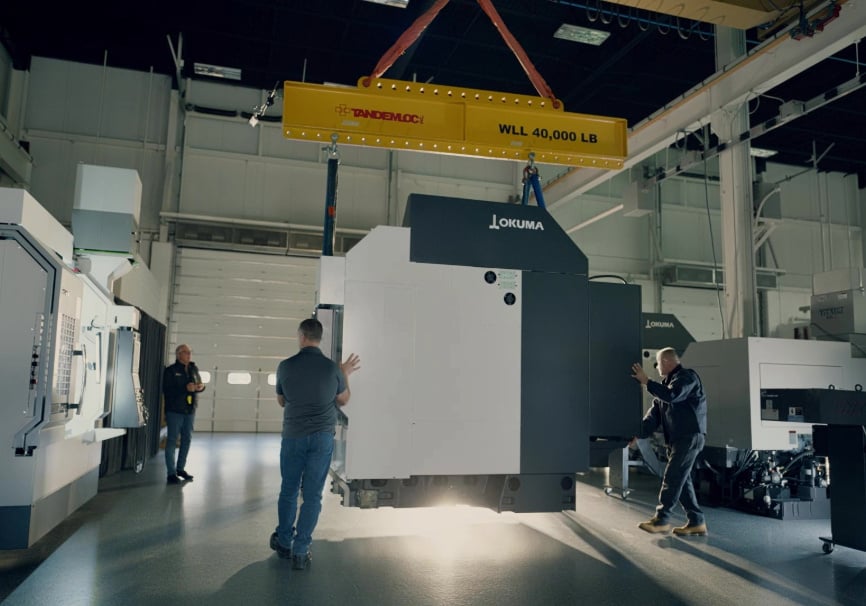
IMTS showed you what’s possible.
Here’s how to put it into production.
IMTS can compress months of research into a few days. You see new approaches to machining, automation, inspection, workholding, software, maintenance, and production support. The hard part begins when the team returns home and the daily schedule takes over.
A post-IMTS production plan keeps that momentum from fading. It connects what your team saw at the show to one defined production problem, a measurable target, and an implementation path that fits the realities of your floor.
Why post-IMTS momentum often stalls
Once the show is over, production realities quickly return. Operators remain stretched thin, changeovers still take too long, preventive maintenance continues to compete with production schedules, and yesterday's opportunities quickly give way to today's priorities.
That is why many manufacturers leave IMTS with great ideas but struggle to determine where to start. A new automation strategy, machine tool, or maintenance initiative may all offer value, but identifying which opportunity will have the greatest impact on current production needs is often the real challenge.
Without answers to those questions, teams tend to either pursue too many ideas at once or push decisions into the next capital-planning cycle. By then, the urgency that sparked the discussion has often been replaced by more immediate operational priorities.
Build your post-IMTS production plan around one constraint
Choose the issue that most directly limits output, schedule stability, or cost control. It might be slow setup, unpredictable downtime, limited unattended production, inconsistent part flow, a quality problem, or a process that depends too heavily on one experienced person.
1. Establish the current baseline
Use the measures your team already trusts. Depending on the problem, that may include average setup time, cycle time, spindle utilization, unplanned downtime, scrap or rework, unattended hours, labor hours per part, or the number of jobs completed per shift. Perfect data can wait; a consistent baseline is enough to support the first sound comparison.
2. Define the operational target
Translate the idea into a specific production goal. “Add automation” is too broad. “Create a repeatable way to load this part family so one operator can supervise the cell and the machine can continue through breaks” gives engineering, operations, and leadership something concrete to evaluate.
3. Test the fit with your real production mix
A solution that works well in a high-volume environment may be a poor fit for frequent changeovers. A machine that shortens cycle time may still create delays if tooling, inspection, chip control, programming, or material handling is not ready. Review part mix, batch size, tolerance requirements, available floor space, operator skills, upstream supply, and downstream inspection before settling on the approach.
4. Build the business case around the full change
Equipment price is one part of the decision. Include integration, tooling, workholding, training, facilities, programming, maintenance, and the production time required to launch. Then compare those costs with the expected effect on capacity, labor coverage, quality, lead time, and production risk. Use a range of outcomes when the data is uncertain instead of forcing a single ROI number.
Match the solution to the problem
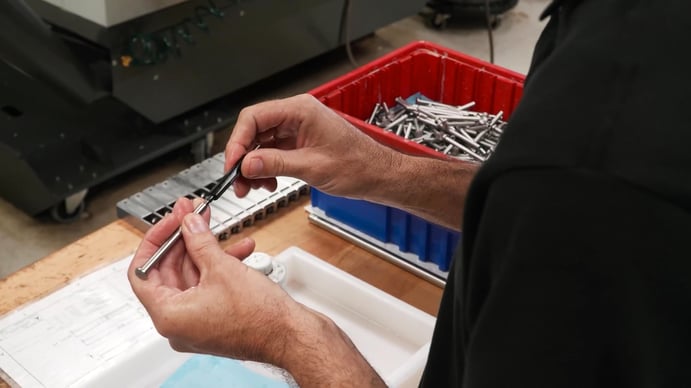
A disciplined post-show review may lead to capital equipment, a process change, targeted support, or another practical path.
Improve the process already in place
Tooling, workholding, probing, chip and coolant management, programming support, or a better changeover method may recover capacity from an existing machine. These improvements can be especially valuable when demand is strong but the current process contains avoidable idle time. Morris Plus connects customers purchasing new equipment with a Productivity Specialist who supports preparation, startup, and continued process improvement. Learn more about Morris Plus.
Automate a stable, repeatable task
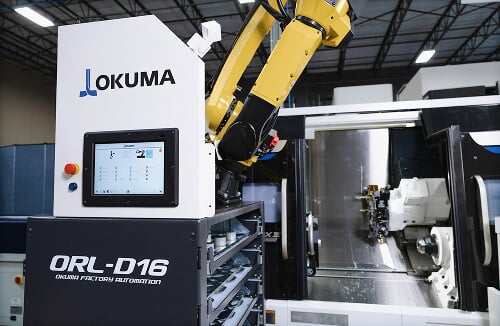
Automation can reduce manual loading and unloading, support more consistent part handling, and extend productive machine time. The process should be stable before it is automated, with known part presentation, cycle variation, quality checks, and exception handling. Morris offers standard and customized machine-tool automation solutions that can be evaluated against the shop’s production mix and operating goals.
Change the machining strategy
Multitasking, five-axis machining, horizontal machining, Swiss turning, or another process change may reduce handling, consolidate operations, or create capacity. For operations teams, show-floor popularity matters less than whether the approach removes the constraint while meeting part, quality, staffing, and financial requirements.
Strengthen uptime and production support
When lost output is tied to reliability, troubleshooting, programming, or skills, the most useful step may be service, maintenance, applications engineering, or training. Morris provides customer support across delivery and installation, operator training, and machine maintenance, along with service, parts, and engineering support.
Proof point: a small cycle-time gain can change the capacity picture
GSC Power Division offers a useful example of why the application matters as much as the equipment. After installing two Okuma LT3000 EX turning centers, the company reported saving about three minutes on a 14-minute cycle through faster spindle orientation, transfer, and live-milling control. That result was specific to GSC’s process, but it shows why post-show evaluation should begin with the work being performed and the time being lost. Read the GSC Power Division customer story.
.png?width=643&height=362&name=Velocity%20Tooling%20LT3000%20EX%20GSC%20Worker%201%20(1).png)
A cycle-time reduction of that size will not appear in every application, and it should not be assumed before testing. The lesson is to identify where non-cutting time, control behavior, setup, or material flow is limiting production, then verify whether the proposed solution changes that constraint.
Plan implementation with production disruption in mind
A promising idea can still underperform if the launch plan ignores the floor. Before approving the project, assign ownership across operations, engineering, maintenance, quality, and finance. Confirm utilities, layout, tooling, programs, workholding, inspection, safety requirements, training, and service support. Decide how the team will prove the process before it becomes part of the schedule.
Set acceptance criteria before installation or integration begins. The criteria might cover cycle time, first-pass yield, changeover time, unattended runtime, operator intervention, or a defined production run. Clear criteria help the team distinguish startup learning from a solution that needs correction.
Finally, plan for the period after launch. Operator questions, program changes, preventive maintenance, spare parts, and process adjustments all affect the value realized over time. A support plan protects the production case that justified the investment.
What a post-IMTS production assessment should answer
A useful post-show conversation should narrow the field and make the next decision easier. Bring the process notes, part families, current performance data, and the ideas your team wants to explore. The discussion should answer four questions:
Which production constraint deserves attention first?
Focus on the issue with the clearest effect on output, uptime, quality, staffing, or delivery performance.
What measure will define improvement?
Agree on a baseline and target that operations and leadership can evaluate without relying on vague efficiency claims.
What must be true for the solution to work?
Identify process stability, integration, tooling, facilities, people, and support requirements before committing resources.
What is the lowest-risk next step?
That may be a process study, application review, automation concept, maintenance plan, test cut, training plan, or formal capital proposal.
Turn IMTS momentum into a production decision
IMTS showed your team a wide range of possibilities. The next step is to decide which possibility fits your shop, what result it should produce, and how to implement it with the least avoidable risk.
Morris helps manufacturers connect machining technology, automation, applications expertise, and ongoing support to real production needs. Schedule a Post-IMTS Production Assessment to review what you saw at the show and build a practical path toward improved throughput, uptime, and investment confidence.
Schedule a Post-IMTS Production Assessment
Let’s evaluate what you saw at IMTS and apply it to your shop. Contact Morris
Frequently asked questions
How soon should we review ideas after IMTS?
Start while the production problem, vendor conversations, and technical details are still fresh. Capture the idea, validate the need, and assign a clear next step before normal priorities push it aside. This preserves momentum without rushing a purchase.
What data should we bring to a post-IMTS review?
Bring the information that describes the constraint: part mix, routing, setup and cycle times, downtime records, scrap or rework, staffing, current equipment, floor-space limits, and the production target. Use the best available data and identify where assumptions remain.
Does every post-IMTS improvement require new equipment?
No. The review may point to tooling, workholding, programming, process changes, maintenance, training, or automation around an existing machine. New equipment makes sense when it solves the constraint and the full implementation case supports the investment.
How should manufacturers evaluate ROI after IMTS?
Compare the full cost of implementation with a realistic range of benefits. Consider capacity, labor coverage, setup and cycle time, quality, uptime, lead time, and risk. Include integration, training, facilities, maintenance, and ramp-up time so the business case reflects the whole change.