
How Better Machine Utilization Can Increase Manufacturing Output
Better machine utilization can increase manufacturing output by turning time lost to setup, waiting, downtime, and unstable processes into productive machining time. Before deciding how to increase capacity, manufacturers should identify the operation limiting throughput and understand how effectively their available machine hours are being used.
The right solution may be improving the existing process, adding automation or supporting technology, or investing in additional equipment. But a machine scheduled for a full shift does not necessarily spend that entire shift making good parts. Setup, program prove-out, tool changes, inspection, material delays, and maintenance issues can all consume available capacity.
The first question should be: What is preventing my current process from producing more?
What Is Machine Utilization in Manufacturing?
Machine utilization describes how much of a machine’s available production time is spent performing productive work. For most manufacturers, the useful measure is not simply whether the machine is running. It is whether that machine is producing the right parts, at the required quality, and when the production schedule needs them.
Utilization is different from activity. A machine can remain busy producing work that is not currently needed while the operation controlling plant throughput waits for tooling, material, or inspection. Understanding true utilization means looking at the complete picture, including good-part output, setup and changeover time, cycle time, equipment availability, quality and rework, and how well production is keeping pace with the schedule. These factors ultimately determine how effectively available machine time contributes to overall manufacturing throughput.
How Do You Find the Real Production Constraint?
Start by identifying where production is slowing down or falling behind. This may be an operation that regularly delays the next step, extends lead times, or makes it harder to keep up with the production schedule. Improving utilization in that area can have a much greater impact on overall output than simply keeping other machines busy.
Areas of improvement may include:
- Producing good parts
- Setup and changeover
- First-piece inspection and adjustment
- Tool replacement or offset changes
- Planned maintenance
- Unplanned downtime
- Waiting for material, programs, tooling, operators or inspection
- Producing scrap or parts that require rework

How Can Manufacturers Improve Machine Utilization?
Reduce setup and changeover time
Cycle-time reduction often receives the most attention because seconds saved per part are easy to calculate. But in a high-mix manufacturing environment, setup reduction may create more usable capacity.
Consider a job that runs for two hours but takes an hour to set up. Reducing the machining cycle by a few seconds may have less effect than improving the changeover or first-piece process. A more repeatable setup can also reduce the time needed to produce and approve the first good part.
Improve process stability
A machine is not being used effectively if the process requires frequent tool changes, offset adjustments or operator intervention. A stable process can run longer between interventions and makes production time more predictable. It is also an important requirement for unattended machining and automation.
MINIMIZE UNPLANNED DOWNTIME
Not every machine issue results in hours of downtime. Short, recurring interruptions can add up over a shift and reduce the time available for machining. Looking at how often downtime occurs, how long it lasts, and what is causing it can help identify problems that are repeatedly taking time away from production.
Maintenance also plays an important role. Delaying necessary service may keep a machine running today, but it can lead to more downtime later. Reliable equipment makes it easier to maintain the process, produce good parts, and make better use of available machine time.
Improve the workflow around the machine
The machine itself is only one part of the production system. Programs, tooling, workholding, inspection, material handling and staffing all affect whether it can keep running.
A machining center waiting for an overhead crane has a workflow constraint.
A machine stopped while an operator measures every feature may need a different inspection approach. Equipment left idle between cycles because one operator is tending several machines may benefit from changes in part presentation, pallet handling or automation.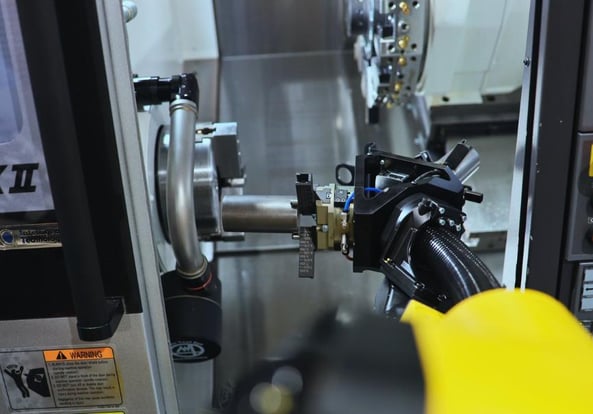
Can Automation Improve Machine Utilization?
Automation can improve machine utilization when the machining process is stable enough to run with less operator intervention. It may extend productive hours, reduce waiting between cycles and allow employees to focus on work that requires their judgment.
Before automating a process, manufacturers should determine:
- Whether the process produces repeatable parts
- Whether tool life is predictable
- How worn or broken tools will be detected
- Whether chips and coolant can be managed during longer runs
- How parts will be loaded, unloaded and inspected
- What happens when the machine encounters an alarm
- Whether sufficient work exists to support the investment
Automation will not correct unreliable tooling, inconsistent workholding or an unproven program. Its value comes from keeping a capable process producing for longer periods.
KEEP PRODUCTION MOVING
Improving machine utilization does not mean every machine needs to run every available minute. What matters is whether that machine is helping the shop produce the parts it needs, when it needs them.
Keeping equipment busy with work that is not supporting current production needs can add work in process without helping customer orders move through the shop. Meanwhile, another operation may still be struggling to keep up with demand.
There also needs to be enough flexibility for planned maintenance, changing part mixes, longer-than-expected setups, and urgent work. The goal is to get more productive time from available equipment without creating new problems elsewhere in the process.
When Does a Manufacturer Need Another Machine?
A manufacturer may need additional equipment when the constrained operation remains fully loaded after reasonable process improvements, demand consistently exceeds available production hours or new work requires capabilities the current equipment cannot provide.
Other reasons may include:
- A need for production redundancy
- New tolerance or quality requirements
- Different part sizes or materials
- Process consolidation
- Additional unattended production
- Greater scheduling flexibility
- Replacement of equipment that is no longer reliable or supportable
Analyzing current machine utilization makes the capital decision more precise. Actual production requirements can help define the machine capacity, tooling, workholding, automation and staffing needed. This reduces the risk of installing another machine without addressing the process conditions that limited the existing equipment.
How Morris Helps Manufacturers Evaluate Capacity
Morris can help manufacturers examine the full production requirement before recommending additional equipment. That evaluation may include the part mix, setup frequency, cycle time, tooling, workholding, programming, inspection, operator involvement, maintenance history and surrounding workflow.
Depending on the constraint, the appropriate next step could involve applications support, process development, probing, tooling, automation, training, service or additional equipment.
Before adding capacity, establish where the current production hours are going. More output may begin with making better use of the machines already on the floor.
Frequently Asked Questions About Machine Utilization
What is a good machine utilization rate?
There is no single utilization rate that is appropriate for every manufacturer. The right target depends on the part mix, setup frequency, process stability, maintenance requirements and role of the machine in the overall production flow. Good-part output and schedule performance provide more context than a utilization percentage alone.
What causes low machine utilization?
Common causes include lengthy setups, material delays, unavailable tooling, program issues, first-piece inspection, equipment problems, inconsistent processes, operator coverage and poor production flow.
Should a manufacturer improve utilization before purchasing equipment?
In most cases, manufacturers should understand current utilization before making a capacity investment. This analysis may reveal recoverable production time or confirm that additional equipment is necessary.
Can automation increase machine capacity?
Automation can increase productive hours by reducing the need for operator intervention between cycles. The machining process must first be stable, repeatable and capable of running for the intended period.