
Why Your Shop Feels Busy But Output Is Not Growing
Most manufacturers monitor obvious constraints such as spindle capacity and labor coverage. Less attention is given to small daily disruptions that add up over time. Delayed starts, long changeovers, inconsistent output, and idle equipment can quietly limit throughput even when machines appear fully scheduled.
Recognizing these less visible constraints is often the first step toward improving production stability and overall performance.
1. Inconsistent Scheduling That Disrupts Flow
Production schedules often look efficient on paper. In practice, operator availability, changeovers, and machine idle time create gaps that reduce output.
Common signs include:
- Machines waiting to be loaded
- Jobs starting later than planned
- Overtime caused by uneven daily production
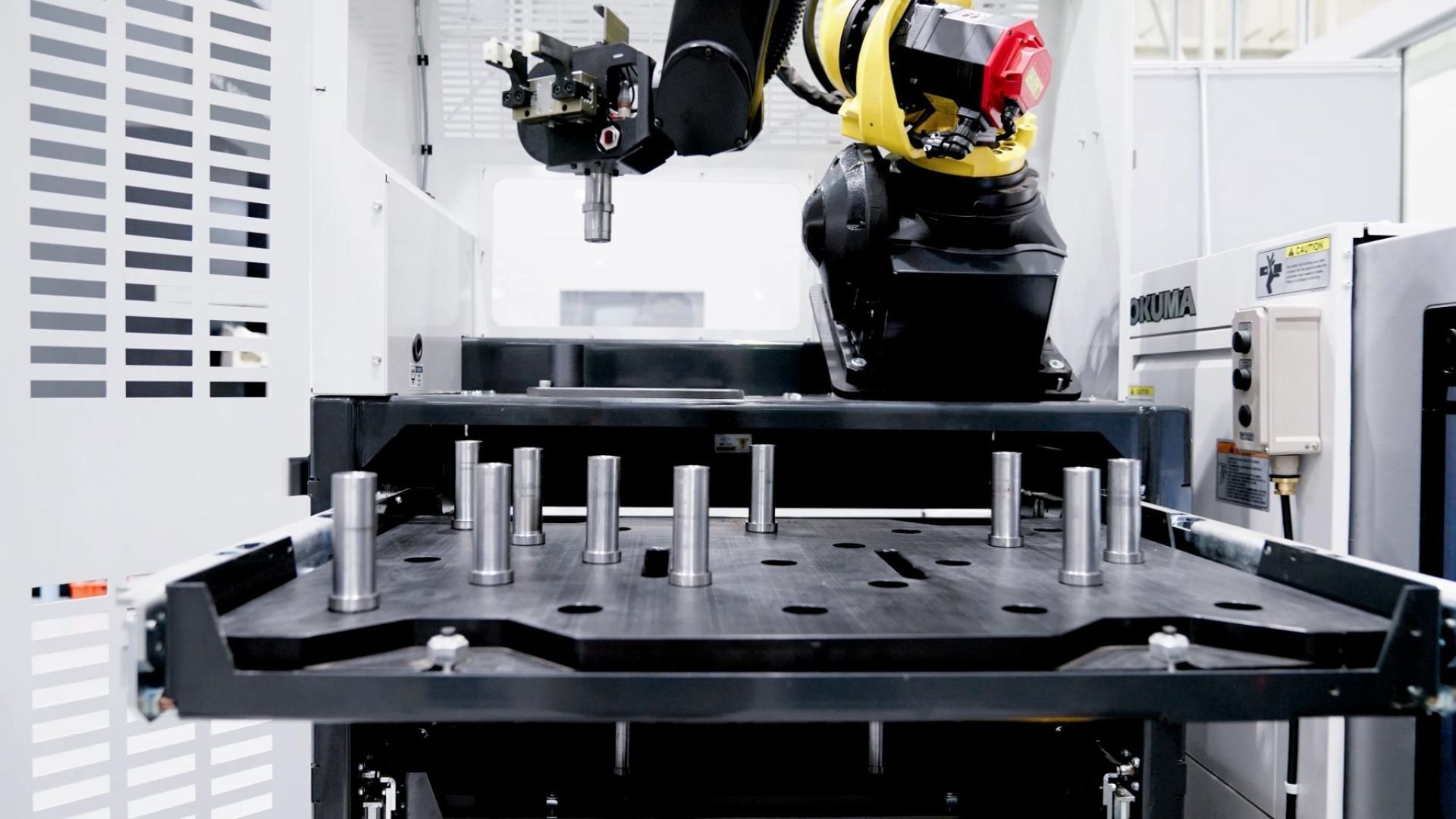
Automated part loading and unloading, commonly seen by a standardized robot package, helps reduce variation in start times and improve schedule stability. When machines continue running through breaks or shift changes, daily output becomes more predictable.
2. Changeover Delays That Extend Spindle Down Time
Changeover time is often overlooked, yet it directly impacts available spindle hours. Significant advances have been made over the last several years in automation technology that allow operators to deploy the next job in minimal time.
Manual setups can lead to:
- Lengthy changeovers between jobs
- Extra operator involvement
- Long-term production growth impairment
Standardized robot packages have been designed to be flexible and respond to high-mix low-volume applications. Even small improvements in changeover time can create meaningful increases in available machining hours over time.
3. Quality Variation That Slows Throughput
Quality issues do more than create scrap. They interrupt workflow.
Manual loading of workpieces can result in:
- Rework
- Inspection delays
- Unexpected machine stoppages
Automated part loading and controlled processes reduce these disruptions. When quality becomes more consistent, production moves forward with fewer interruptions.
4. Underutilized Machines During Off Hours
Many shops invest in advanced machine tools but operate them only during staffed shifts. Nights and weekends often remain unused.
This can lead to:
- Idle spindles after hours
- Output limited by labor coverage
- Slower return on equipment investment
Extending run time beyond staffed hours increases overall utilization. Even a few additional unattended hours per day can significantly raise annual output.
5. Process Variability That Limits Scalability
As production volume increases, small inconsistencies become larger problems.
Manual processes may cause:
- Uneven cycle times
- Output that changes from shift to shift
- Dependence on specific operators
Standardized processes create more predictable results. When output is stable and repeatable, planning becomes easier and growth becomes more manageable.
Identifying the Constraint Before Increasing Capacity
Productivity limits are not always caused by slow machines or too few people. In many shops, the real issue is process inconsistency. When jobs start late, setups take longer than expected, or quality varies from shift to shift, output drops even if capacity on paper looks strong.
By tracking machine utilization, changeover time, unattended hours, and process repeatability, manufacturers can see where production is being restricted. Improving consistency in these areas often increases usable capacity without purchasing additional equipment.
See how automation can unlock more from your existing equipment.